The Spanish ESC analyses the economic situation in the EU, and problems of institutional confidence
• The EU should take a less restrictive approach in fiscal policy, albeit without questioning the need for fiscal consolidation, so as to substantially boost public investment. The Council also considers that greater flexibility should be allowed in complying with the consolidation roadmap.
• The European Fund for Strategic Investments, fleshing out the Juncker revival plan, appears unsuitable for giving fiscal impetus to the regions where the crisis is most severe and which have less budgetary margin for backing investment projects.
• The Council believes it would be reasonable to strengthen the EU budget and to establish mechanisms for mutualising public debt, but no progress has been made in this field.
• Regarding national competitiveness boards, which are to have a mandate to assess whether wages are evolving in line with productivity, the Council expresses concern that this power may clash with the model on which wages are determined in the Spanish institutional framework.
• The Council sees a need for greater coordination and convergence in the field of economic and social policy in order to reduce the great disparities in competitiveness and social cohesion.
• The EU’s new economic governance has had the effect of reducing the role of trade unions and employers’ organisations at European level in the decision-making process.
• Community governance has proved deficient in taking decisions in a joint and operative way in response to the challenges arising. The EU faces three crises: Community governance, asylum and refuge, questioning Europe’s traditional values and culture of hospitality and even the principle of free movement, and a neighbourhood crisis, demonstrating the weakness of European foreign policy. Europe continues to work on an intergovernmental logic that has generated a loss of legitimacy in EU institutions, resulting in disaffection in the general public.
• An EU political and institutional political architecture is needed to ensure that the transfer of national sovereignty to the Union is accompanied by greater democratic legitimacy and accountability of EU institutions.
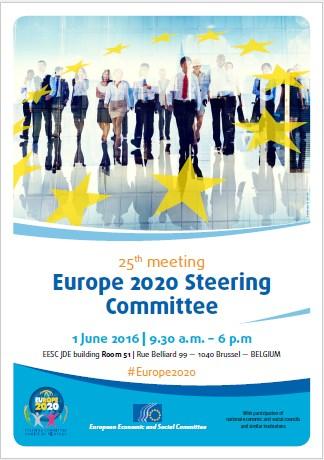
The Europe 2020 Steering Committee's 25th meeting is to be held at the EESC building, Brussels, on 01 June 2016, from 2.30 p.m. until 6 p.m., in room JDE-51.
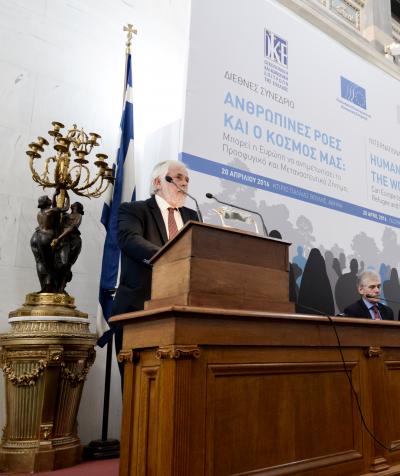
OKE-EESC-EC International Conference in Athens on 20 April 2016
On Wednesday 20 April 2016 the Economic and Social Council of Greece (OKE), the European Economic and Social Committee (EESC) and the Representation of the European Commission in Greece jointly organised an international conference dedicated to the theme "Human flows and the world we share: can Europe tackle the refugee?". The symposium was held in the Old Parliament House in Athens.
The Euromed Summit brings together some 120 participants from a range of economic and social councils, or similar institutions, representatives of employers, trade union, other economic and social interests groups and NGOs from countries which are members of the Union for the Mediterranean.
This year, the exchange will focus on the following topics:
Promotion of legal migration
Women participation in labour force and women's entrepreneurship
Organised civil society and climate change in the view of the COP22
The coordination of social protection systems
As on previous occasions, the meeting will conclude with the adoption of a final declaration
In March 2016, the European Commission presented a first draft of what is to become the European platform of social rights and launched an extensive consultation.
The European Economic and Social Committee and the EESC were both seized of the matter, the first by the President of the Commission, Jean-Claude Juncker, and the second by the French Government.
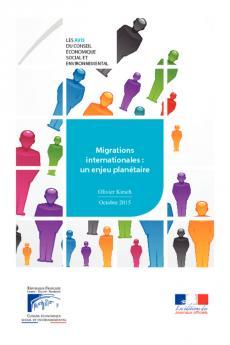
The Section for European and International Affairs of the French ESEC has long been examining the global issue of international migrations. The "migrant crisis”, which has been at the heart of current affairs in Europe since the spring of 2015, mentioned within this Opinion should not distort the overall reality: according to United Nations figures, international migrations involved 232 million people in 2013, which represents hardly more than 3% of the world population and around 9% of that of developed countries.
The annual meeting of the Presidents and Secretaries-General of the national ESCs of the EU and the EESC will be held in Bucharest on 19-20 November 2015. At this occasion participants will discuss "The role and implication of European ESCs in combatting poverty and social exclusion in times of economic and political crisis".
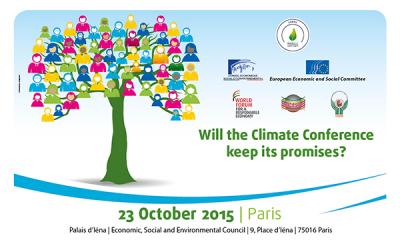
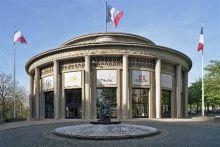
23 October 2015 - Paris: A seminar, co-organised by the French Economic, Social and Environmental Council, the European Economic and Social Committee, the Union of Economic and Social Councils and Similar Institutions of the Francophone member states and governments (UCESIF), The Union of Economic and Social Councils of Africa (UCESA) and the World Forum Lille for a Responsible Economy