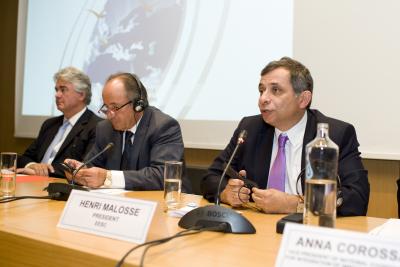
The public hearing on Artificial intelligence & Society will be held on 1 February 2017 at the EESC premises, 99 Rue Belliard, room JDE 62.
Our guest speakers from academic, corporate and trade union backgrounds, will discuss the concept of artificial intelligence and how it works in practice.
AI technologies offer great potential for creating new and innovative solutions to improve peoples lives, grow the economy, and address challenges in health and wellbeing, climate change, safety and security.
On 6 February 2017, the European Economic and Social Committee will be organising a hearing as part of its preparatory work in order to issue its own-initiative opinion on The effectiveness of EU policies for SMEs.
On 30 and 31 March, 100 students and 39 teachers from all 28 EU Member States and the five EU candidate countries (Albania, the former Yugoslav Republic of Macedonia, Montenegro, Serbia and Turkey) met at the EESC in Brussels for Your Europe, Your Say! 2017. Before the event, the 33 schools, selected by drawing lots, had been visited by an EESC member who helped prepare the students to the discussions. This year's theme was Europe@60: Where to next?
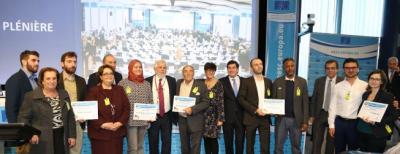
The European Economic and Social Committee (EESC) has awarded its 2016 Civil Society Prize to five organisations and individuals from across Europe who have demonstrated outstanding examples of solidarity towards refugees and migrants. The first prize went to the Hungarian NGO Artemisio Foundation (14 000 EUR), while the German organisation SOS Mediterrannee, the Greek baker Dionysis Arvanitakis, a branch of the Spanish NGO SOS Racismo and the Greek NGO Iliaktida (Sunbeam) received 9 000 EUR each.
526th Plenary Session including the following events:
• Debate on the work and recent activities of the European Ombudsman, with the European Ombudsman Emily O'Reilly Wednesday 31 May 2017 from 3 to 4 p.m.
• Debate as part of the EESC’s contribution to the mid-term evaluation of the Erasmus + programme with Tibor Navracsics, European Commissioner for Education, Culture, Multilingualism, Youth and Sport, on Wednesday 31 May from 4.30 to 5.45 p.m.
• Discussion on the priorities of the European Parliament and on future cooperation with the EESC, with Antonio Tajani, President of the European Parliament Thursday 1 June 2017 from 12.30 to 1.30 p.m.
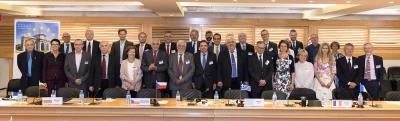
The Annual Meeting of the Presidents and Secretaries-General of the national ESCs of the EU and the EESC was dedicated to "The future of work and social rights in a changing Europe". It was hosted by the Economic and Social Council of Spain and held in its premises in Madrid (Calle de las Huertas, 73) on Thursday 6 and Friday 7 October 2016.
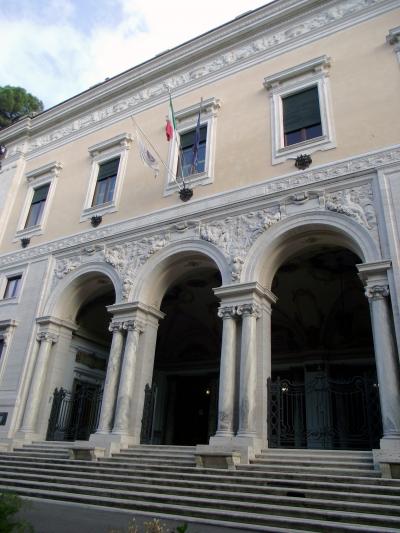
The EESC Workers' Group will hold an extraordinary meeting at the premises of the CNEL (Consiglio Nazionale Economia e Lavoro - Italian National Council for Economics and Labour) in Rome on 26 September 2014.
Chaired by group president, Georgios Dassis, the event will unveil the priorities of the Italian Presidency of the European Union and examine the economic and social situation in Italy.
During the conference a study will be presented on "the representation of the labour world in national and European institutions" carried out by the University of Verona.
In the framework of the Greek Presidency of the Council of the European Union, the Economic and Social Council of Greece hosted an International Conference entitled "A comprehensive and common migration policy in Europe: What are the challenges for cooperation with third countries?". The event was held at the Acropolis Museum in Athens, on Monday, June 30, 2014.
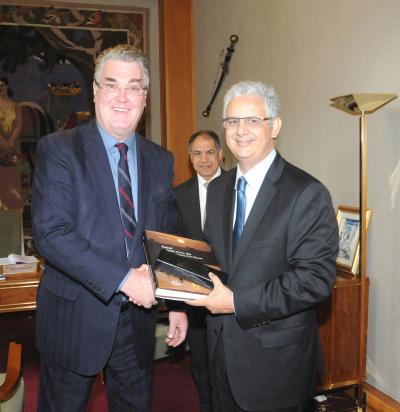
On 27 May, a delegation from the Moroccan ESEC, headed by its recently elected president Nizar Barak, visited the French ESEC to review cooperation between the two councils, established by a protocol signed on 27 September 2011 .
The European Union is undergoing a profound crisis of legitimacy. While two thirds of Europeans living in the euro area still support the common currency and economic and monetary union, only a third say they have faith in the EU's institutions, which is the lowest level ever recorded. Moreover, a growing majority believe that their voice is not heard loudly enough.